Table of Contents
Every day, thousands of people in India search for jobs online, and thousands of companies look for the right people to hire. A job portal is the bridge between the two. For an entrepreneur, a recruitment agency, a coaching institute or a local business group, owning a job portal can be a strong business and a valuable service for the community.
But a job portal is not just a website with a list of jobs. It is a complete system with job seekers, employers, payments, search, alerts and a lot of trust. This guide explains how an online job portal works, which features matter, how portals earn money and how to build one the right way in 2026.
What Is an Online Job Portal
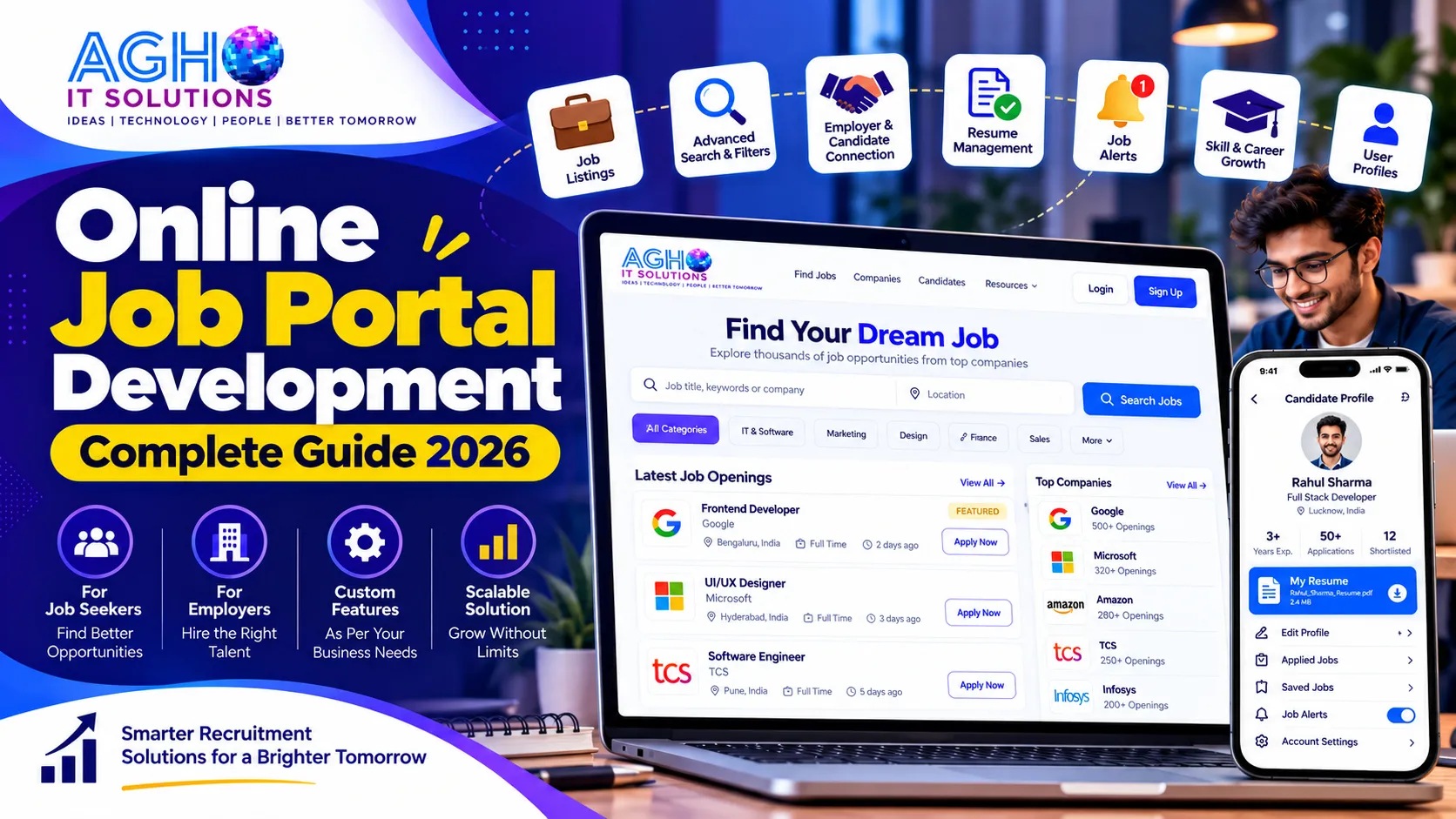
An online job portal is a website, and often a mobile app, where employers post job openings and job seekers search and apply for them. It also stores resumes, sends job alerts, lets recruiters search candidates and gives the owner a panel to manage everything.
Well known portals serve the whole country, but there is plenty of room for focused portals that serve a particular city, industry or type of worker.
Types of Job Portals You Can Build
- General job portal: Jobs from all industries and levels for a wide audience.
- City or local job portal: Focused on one city or state, such as jobs in Lucknow or Uttar Pradesh, which makes it easier to build a base of local employers.
- Niche job portal: Built for one field such as healthcare, IT, teaching, engineering, hospitality or legal jobs.
- Fresher and campus portal: Internships and entry level jobs for students and new graduates, often linked with colleges.
- Recruitment agency portal: A portal used by a staffing or consultancy firm to manage clients, jobs and candidates.
- Blue collar and skilled worker portal: Jobs for drivers, technicians, electricians, delivery staff and other skilled workers.
- Company career portal: A portal used by one large employer to manage its own hiring.
Who Should Build a Job Portal
- Entrepreneurs who want to start a new online business.
- Recruitment and placement agencies that want to go digital.
- Colleges and training institutes that want to help students find jobs.
- Media and news websites that want to add a jobs section.
- Business associations and local communities that want to support hiring in their area.
Key Features of a Good Job Portal
Features for Job Seekers
- Simple registration: Sign up with email, mobile number and OTP, and with social login if needed.
- Profile and resume: Upload a resume or build one online with education, skills and experience.
- Smart search and filters: Search by keyword, location, industry, salary, experience and job type.
- Job alerts: Automatic emails or messages when a matching job is posted.
- Easy apply: Apply to a job in one or two clicks using the saved profile.
- Saved jobs and application tracking: See which jobs were applied for and what stage each application has reached.
- Notifications: Updates when an employer views or shortlists the profile.
Features for Employers
- Company profile: A page with company details, logo, photos and a list of open jobs.
- Job posting: Post a job with description, skills, salary, location and expiry date.
- Posting packages: Free and paid plans with different numbers of jobs and features.
- Resume database access: Search and download candidate profiles based on a plan.
- Applicant management: Shortlist, reject, rate and add notes to applicants.
- Interview scheduling and messaging: Contact candidates and fix interviews from inside the portal.
- Reports: See how many people viewed and applied for each job.
Features for the Admin
- User management: Approve or block employers and job seekers.
- Job moderation: Review jobs before they go live to keep out fake and spam postings.
- Package and payment control: Create plans, set prices, manage coupons and see payment records.
- Content management: Edit pages, banners, categories, blogs and email templates.
- SEO tools: Control page titles, descriptions and URLs for jobs and categories.
- Advertising management: Sell banner space and featured listings.
- Reports and dashboard: See registrations, jobs, applications and income at a glance.
Advanced Features
- Resume parsing: The system reads a resume and fills in the profile automatically.
- Job matching: Suggests jobs to candidates and candidates to employers based on skills and experience.
- Online tests and assessments: Let employers test candidates before interviews.
- Video interview support: Schedule and record interviews.
- Multi language support: Hindi and English or regional languages to reach more people.
- Mobile app: Push notifications and quick applications from a phone.
How Job Portals Earn Money
A portal can have several sources of income, and most successful portals use more than one.
- Paid job postings: Employers pay to post jobs, or to post more than a free limit.
- Subscription plans: Monthly or yearly plans for employers with a set number of jobs and resume views.
- Resume database access: Recruiters pay to search and download candidate profiles.
- Featured and urgent listings: Employers pay to place their jobs at the top or highlight them.
- Banner and display advertising: Companies and training institutes advertise on your pages.
- Job seeker services: Premium resume writing, profile highlighting or training courses.
- Placement and recruitment fees: Charges for successfully placing a candidate, if you run an agency.
The Biggest Challenge Is Getting Both Sides
Every job portal faces the same problem. Job seekers will not come if there are no jobs, and employers will not post if there are no job seekers. The solution is to start with one side and build from there.
- Begin with a clear focus, such as one city or one industry.
- Add jobs yourself in the beginning by collecting openings from local companies, agencies and public sources, with permission.
- Offer free job posting for the first few months to attract employers.
- Promote the portal to job seekers through social media, college groups and local communities.
- Collect reviews and success stories from the first placements and share them.
Make Your Job Portal Easy to Find on Google
Job seekers use Google for almost everything, so search visibility is critical.
- Give every job its own page with a clear title, location and details.
- Create pages for categories and cities, such as jobs in Lucknow or teaching jobs in Uttar Pradesh.
- Remove or mark expired jobs properly so Google does not show outdated results.
- Keep the portal fast on mobile, because most job seekers search on their phones.
- Publish helpful content such as resume tips, interview questions and salary guides.
Our SEO services can help your portal rank for the searches that bring job seekers and employers. You can also read our guide on website speed optimization for Google rankings to understand why speed matters.
Build Trust and Keep Fake Jobs Out
Trust is the most valuable asset of a job portal. One fake job posting or one data leak can damage your name quickly.
- Verify employers with company details, email and phone before approving jobs.
- Review job posts before they appear, and block posts that ask job seekers for money.
- Give job seekers an easy way to report suspicious jobs.
- Protect resumes and personal data with strong security and clear privacy rules.
Resumes contain personal information, so data protection matters. Read our guide on India data protection rules for businesses and our tips on protecting your website from cyber attacks.
Custom Portal or Ready Made Portal Script
A ready made script is cheaper and faster to start, but it can be limited and harder to change. A custom portal is built around your plan, your features and your payment model, and it can grow with your business. If you are not sure which way to go, our comparison of custom software versus ready made software can help you decide.
How Long Does Development Take and What Affects the Cost
Development time and cost depend on the number of features, the design, the number of user types, the payment system, whether you need a mobile app and how much custom work is required. As a general guide, custom web portals usually take around 30 to 60 days. For a better understanding of how pricing is decided, you can read our guide on website development cost in Lucknow.
Steps to Launch Your Job Portal
- Step 1: Decide the type of portal and the audience you will serve first.
- Step 2: List the features you need on day one and the features that can wait.
- Step 3: Plan your income model and your package prices.
- Step 4: Choose a development partner and finalize the design and features.
- Step 5: Build and test the portal with real users and sample jobs.
- Step 6: Add your first jobs and invite your first employers.
- Step 7: Launch with a marketing plan and improve the portal using user feedback.
Marketing Your Job Portal After Launch
- Social media: Share daily job posts, tips and success stories. Our social media management team can handle this for you.
- Paid ads: Use Meta ads and Google ads to bring in job seekers and employers.
- Messaging: Send job alerts and offers using bulk WhatsApp marketing, bulk SMS marketing and email marketing.
- Local partnerships: Work with colleges, training centers and business groups.
- Employer follow up: Use a CRM software to track employer leads and renewals.
Common Mistakes to Avoid
- Trying to serve every city and every industry on day one.
- Launching with very few jobs, so visitors find nothing useful.
- Allowing fake or unverified job postings.
- Ignoring mobile users.
- Choosing a design that looks good but is slow and hard to use.
- Forgetting search visibility until after launch.
- Not protecting resumes and personal data.
- Having only one source of income.
Planning a News or Content Portal Too
Many job portal owners also publish news, career tips and local updates to attract more visitors. If you are interested in a content portal, you can read our guide on how to start a news portal website in India.
Online Job Portal Development from Agho IT Solutions
At Agho IT Solutions in Lucknow, we provide online job portal software for entrepreneurs, recruitment agencies and organizations that want to launch their own hiring platform. We also build websites and mobile apps for job portals, and support them with SEO and digital marketing after launch. Talk to our team and book a demo to see how a portal can be planned around your idea.
Call us on +91-9194046587 or visit us at L-III/77, Sector-D, Aliganj, Lucknow, Uttar Pradesh 226024. You can also contact us online to discuss your project.
Frequently Asked Questions
Can I start a job portal for only one city or one industry?
Yes, and it is often the best way to start. A focused portal is easier to promote, attracts relevant employers faster and can be expanded later.
How do job portals make money?
Common sources are paid job postings, subscription plans, resume database access, featured listings, advertising and placement fees. Most portals combine several of these.
How long does it take to build a job portal?
It depends on the features and design. Custom web portals usually take around 30 to 60 days, and a mobile app adds extra time.
Do I need a mobile app for my job portal?
A mobile friendly website is the first requirement. A mobile app helps with notifications and quick applications, and can be added when the portal starts getting regular users.
How do I stop fake jobs on my portal?
Verify employers before approval, review job posts, block posts that ask for money from job seekers and give users a report button.
How will I get my first employers and job seekers?
Start with a clear focus, add jobs from local companies, offer free posting for a limited time and promote the portal through social media, colleges and local communities.