Table of Contents
Every small business owner eventually faces this decision. You need software to run part of your business — inventory, billing, customer management, scheduling — and there are two paths. Buy something ready-made off the shelf, or get something built specifically for how your business works. Most owners default to ready-made because it feels cheaper and faster. That is not always true.
What Ready-Made Software Gets Right
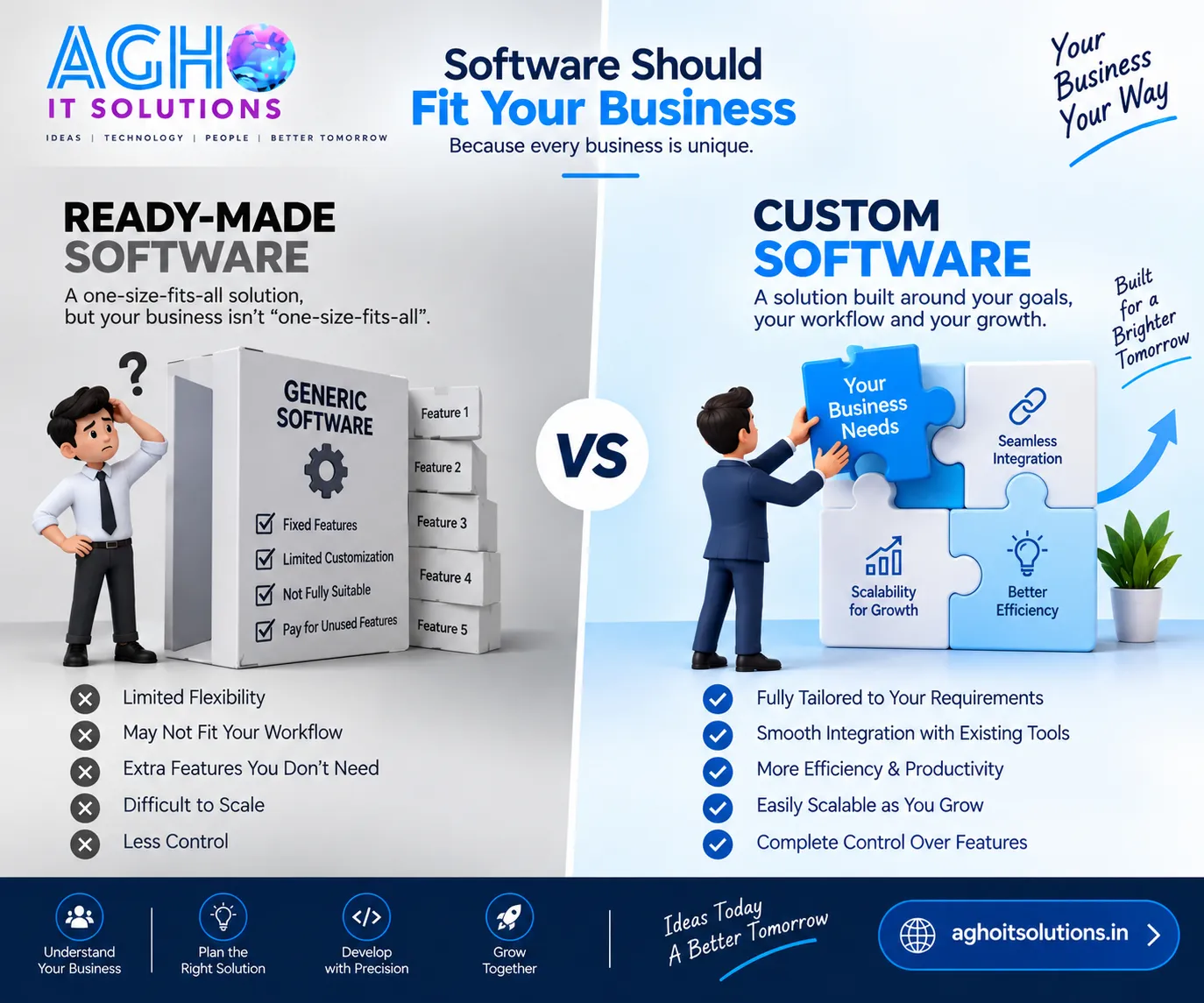
Ready-made software like Tally, Zoho, or a standard e-commerce platform is built, tested, and used by thousands of businesses already. It is cheaper to start with, usually charged monthly, and you can begin using it the same day you sign up. Support documentation, tutorials, and communities already exist because so many people use the same tool. For a business with a fairly standard process — a shop needing basic billing, a small team needing standard project tracking — ready-made software is often the right call.
Where Ready-Made Software Falls Short
The limitation shows up when your business does something slightly different from what the software was designed for. Maybe you need a specific approval flow before an order ships, or your business combines two processes that no single tool covers — say, service bookings tied to inventory tied to a loyalty program. With ready-made software, you either bend your business process to match the tool, or you buy three separate tools and manually connect them with spreadsheets, which becomes its own maintenance headache.
What Custom Software Solves
Custom software is built around your actual business process instead of the other way round. It can combine functions that would otherwise need multiple subscriptions, integrate directly with your existing systems, and grow with features you add over time rather than being locked into a vendor's roadmap. You also own the software outright once it is built, with no recurring per user fees that scale unpredictably as your team grows.
The Real Cost Comparison
Ready-made software looks cheaper on a monthly basis, but the cost adds up over years, especially as you add users, storage, and premium features. Custom software has a higher upfront cost but no ongoing per user licensing. For a business expecting to operate the same way for the next 5 to 10 years, custom software often works out cheaper over that period even with the higher initial investment. For a business still figuring out its process, or one that expects to pivot, ready-made software's flexibility to switch tools easily is worth more than ownership.
How to Decide
Ask three questions. Does a ready-made tool already do 80 percent or more of what you need without heavy workarounds? If yes, buy it. Is your workflow genuinely unique in a way that gives you a competitive advantage — a process competitors cannot easily copy? If yes, custom software protects that advantage. Do you have the budget to invest upfront for long term savings, or do you need to keep costs low and flexible while the business is still finding its footing? The answer to these three questions usually makes the decision clear.
A Middle Path
Many businesses do not need a fully custom system from day one. A common approach is starting with ready-made software, then commissioning custom modules or integrations only for the specific gaps that off the shelf tools cannot fill. This keeps initial cost low while solving the exact problems that matter.