Table of Contents
A decade ago, running a business meant keeping records on physical registers or, at best, spreadsheets stored on a single office computer. If that computer crashed or the owner needed to check inventory while away from the shop, there was no way to do it. Cloud based software has changed this entirely, and the shift has accelerated across Indian businesses of every size heading into 2026.
What Cloud Based Business Management Actually Means
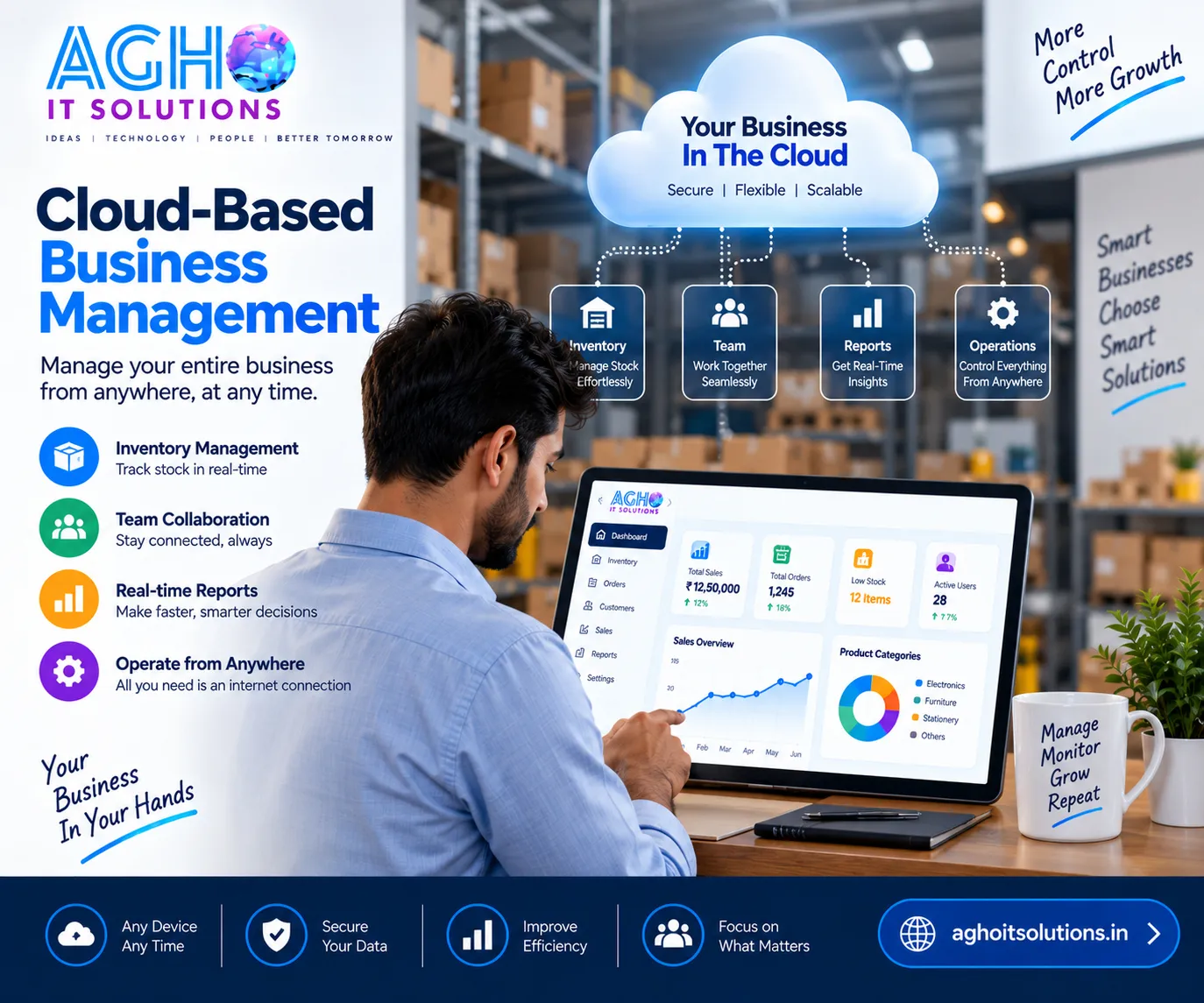
Cloud based software stores a business's data on remote servers rather than on a single local computer, and makes it accessible through the internet from any device. An owner can check sales figures from their phone while traveling, a manager can update inventory from a warehouse, and an accountant can review books without needing to be physically present in the office.
Real Time Visibility Changes Decision Making
The biggest shift cloud software brings is real time information. A business owner using traditional records often makes decisions based on data that is days or weeks old, because updating physical records or disconnected spreadsheets takes time and coordination. Cloud based systems update instantly, so a stock shortage, a slow moving product, or a cash flow issue is visible the moment it happens, not weeks later when it has already caused a problem.
Multiple Locations, One System
Businesses with more than one branch or location used to struggle to keep records consistent across each site. Cloud based systems solve this by giving every location access to the same central system, so inventory, sales, and customer data stay unified rather than scattered across separate local systems that never quite match up.
Lower Costs, No Dedicated IT Team Needed
Traditional on premise business systems required a server, someone to maintain it, and a plan for what happens when hardware fails. Cloud based software removes this burden entirely, since the provider manages servers, security, and backups. This makes enterprise level business management tools accessible to small businesses that could never have justified the cost of an in house IT setup before.
Security Concerns Are Often Backwards
Many business owners hesitate to move to the cloud over security worries, but in most cases cloud providers invest far more in security, encryption, and backup infrastructure than a small business could ever afford on its own local server. A cloud provider's business depends entirely on keeping data secure, which usually makes it a safer option than a local computer with no dedicated protection.
What to Look for Before Migrating
Not every cloud software provider is equal. Check where the servers are located and whether that matters for your compliance needs, how often backups happen, what the uptime guarantee looks like, and how easily data can be exported if you ever need to switch providers. A good cloud migration plan also includes training the team, since the biggest risk in moving systems is not technical but people struggling to adapt to a new way of working.
The Direction This Is Heading
As internet infrastructure across India continues improving even in smaller cities, cloud based business management is becoming the default rather than the exception. Businesses that delay this shift often find themselves competing against others who can make faster, better informed decisions simply because their data is visible in real time.